
My name is Alan Owen and I live in Llanddarog, Carmarthen, with my wife Mel and my son Joseph (18). My cardiac arrest happened at Caldicot Leisure centre on the 3rd of April 2022 at 10:52. I was an IT Consultant, specialising in Data Protection and also the founder of LABRATS, which looks after Nuclear Test Veterans and the victims of nuclear testing across the world. I worked from home and travelled the world advocating for the nuclear test community.
I play walking football for Carmarthen Town and we had entered the South Wales League. A league day had been scheduled for the 3rd of April and I had been selected to play. This would be my first league match. I spoke with my son (who was 15 at the time) the day before and was not going to attend, but we decided that we would go and experience the day together. We set out from Llanddarog and arrived early. I got changed into our kit and went out to the pitches. (Walking football is 6 a-side and the matched last 15-20 minutes). We had two teams playing that day.
I played the first game and was stood talking to my colleague whilst watching the other team play. I said to him ‘I don’t feel very well’. He said, ‘You don’t look very well’ and then I suffered my cardiac arrest and collapsed in front of him. Luckily, he is an ex police officer who put me in the recovery position and then realised that I was not breathing. Another colleague who was an exarmy serviceman came over and started CPR.
The manager of the team called 999 and the emergency team at Caldicot came running to the scene. They took over the CPR and the pitch was cleared to allow for the Wales Air Ambulance to land. Unfortunately, my son witnessed the whole event. He was taken to reception whilst the CPR continued.
The team at Caldicot used their defibrillator to shock me three times. The third shock restarting my heart. A young lady called Kirsty attached the leads, the first time she has ever used the defib after her training.
An Air Ambulance arrived within 20 minutes and Critical Care Practitioner Ruby assessed my condition and she needed to put me on a ventilator at the scene. Unfortunately, there was no consultant on board the aircraft to administer the anaesthetic, so another helicopter was called.
The tournament was cancelled and the other teams left the scene, including my team mates who did not know if I was going to survive.
My wife was contacted and told to drive to the Heath hospital in Cardiff, where I would be going. This was incredibly difficult for her to hear, she contact my sister in Cheltenham and she came to Cardiff.
My wife contacted a friend who lived near caldicot to come and get Joseph and she took care of him and drove him to the hospital.
After ventilation, I was put in the back of the helicopter, but it was felt that my condition was too unstable, so I was taken (with Ruby) by road ambulance to the hospital. (Because of the lack of space in the helicopter, CPR is not possible)
I entered the hospital and was immediately scanned and assessed. I had two stents fitted and was diagnosed with Hypertrophic Cardiomyopathy. My wife, son, sister and friends spent 27.5 hours sitting on plastic chairs waiting to see if I had survived and to see if I had suffered any brain injury through the lack of oxygen.
I spent 11 days in hospital; I was fitted with an ICD after consultation with Professor Yousef.
Recovery was hard, getting used to an ICD, new medication and understanding my new condition was difficult. Lots of information was thrown at us in a short space of time and my life had changed forever. I had been effectively dead for 8 minutes.
Realising that I could have died that day and not survived the cardiac arrest is difficult to live with. If I had not gone to the tournament, I would have been walking my dogs with no defib available and I know I would not have made it.
Physically I was black and blue, I had six broken ribs, extensive bruising and a wound from the ICD fitment.
In hospital, the treatment was exceptional, the staff were incredible. The Wales Air Ambulance were fantastic, sending two helicopters, working with the staff and making sure that I had the care that I needed to survive the arrest.
The ICD team explained everything to myself and my wife about implanting an ICD, Trudie showed us a device and how it worked and what it would mean to my life if I decided to have it f itted. I was for me a no brainer and if Professor Yousef wanted me to have the device, I would not go against his expert advice.
My friends who recognised what had happened to me and started CPR stopped any major brain injury. The staff at the leisure centre who came running and used the defib to start my heart were incredible. My chain of survival was intact. I now know that many people are not so lucky.
I was sent home with a pack of information for peer support including Cardiomyopathy UK, who continue to support us through bi-monthly support sessions. The Inherited Cardiac Clinic at Morriston whose support through genetic testing and through their support sessions have been invaluable to the family.
The aftercare service from EMRTS through Jo and Hayley has helped the family a lot. They filled in the blanks for myself and my wife and they have supported us at lot. They arranged for me to meet the team who saved my life, which was an incredibly emotional day for the whole family.
My wife worked with Cardiomyopathy UK to start support sessions for the co-survivors to be able to talk with each other.
I have received incredible support from Sudden Cardiac Arrest UK and attended their conference in 2025 to meet with other survivors.
After discharge, my son received his Echocardiogram very quickly, but my sister did not receive hers for 18 months. She suffers from anxiety and we ended up paying for a private scan because the NHS were just too slow, this despite letters and pressure from the Welsh NHS.
Since the arrest, Professor Yousef and his team have been incredible. Regular follow-ups, regular testing and support when re-applying for my driving licence.
We have used many avenues for support, the regular sessions with Cardiomyopathy UK are fantastic and through the EMRTS aftercare service, we feel as if we are not alone.
During my stay in hospital and in the immediate weeks, it would have been beneficial to myself and my family to speak to someone who had experienced what we were going through. Understanding medical jargon, understanding the process of recovery is difficult after such a traumatic experience.
Wales Air Ambulance and EMRTS have provided support from the immediate call and continue to do so. They are available at any time to talk to. Cardiomyopathy UK and the Inherited Cardiac Clinic at Swansea continue to provide support.
I now volunteer with the Wales Air Ambulance, providing talks to groups, telling my story to help fundraise for this import service.
My wife has run the London Marathon for Cardiomyopathy UK and I wrote a book called ‘1 in 10 survivor’ which helped me during my recovery. This is available to purchase at https://books.by/beyond-trauma
I am a big advocate for peer support, it has helped me immensely, I believe it is essential to help people who are overwhelmed by the experience. It is traumatic, it is life changing. Speaking to other people who have travelled the path that you are going to undertake is invaluable.
Speaking to someone who gets it, not a clinician, not technical, just someone who understands.
I did not get any cardiac rehab because cardia arrest suffers do not have a defined pathway like heart attack patients. This has to change. Knowing that you heart stopped, knowing that you were clinically dead for 8 minutes is heard to comprehend.
The NHS should employ more peer support workers to help people, they should visit in hospital, provide advice and guidance and signposting services both to the patient and the family. So often the patient does not remember the incident, it is left to family members to make decisions and they need to be supported.
I asked for mental health support in 2023 and unfortunately, I am still waiting for an appointment. Dealing with knowing you died and that your life could have ended that day is extremely challenging and I have had to seek peer support elsewhere due to the lack of mental health support available. This is an area that needs improvement.
I was lucky, I did not suffer any brain injury, this is due to my chain of survival being intact, I had great support from my family and friends. I now live differently, but I am thankful for the second chance, others are not so lucky and they must be supported on their individual journey.
I want to help as many people as possible understand that this traumatic event in their life is not the end of the road, it is a diversion from the path they thought they were on, but with help and support they can work through it.
I am a volunteer at Cardiomyopathy UK, helping with the sessions. I volunteer with the Wales Air Ambulance providing talks to community organisations, schools and helping them fundraise. I also volunteer with Sudden Cardiac UK, helping with their IT. I am a member of the EMRTS Patient Forum and have told my story to the heads of NHS Wales.
It is important that the funding for essential services during and after traumatic incidents is kept at a level in which it is needed. I am a survivor because of these services and the world needs to know that the system does work, that these services are essential.
I had no prior symptoms before my cardia arrest. Now I am in a much better place, with medication my condition is currently under control. My ICD is in place to shock me if required. I have access to medical support and peer support. Everyone should have this.
Watch our 2-minute animation on how to respond to cardiac arrest with CPR and defibrillation.
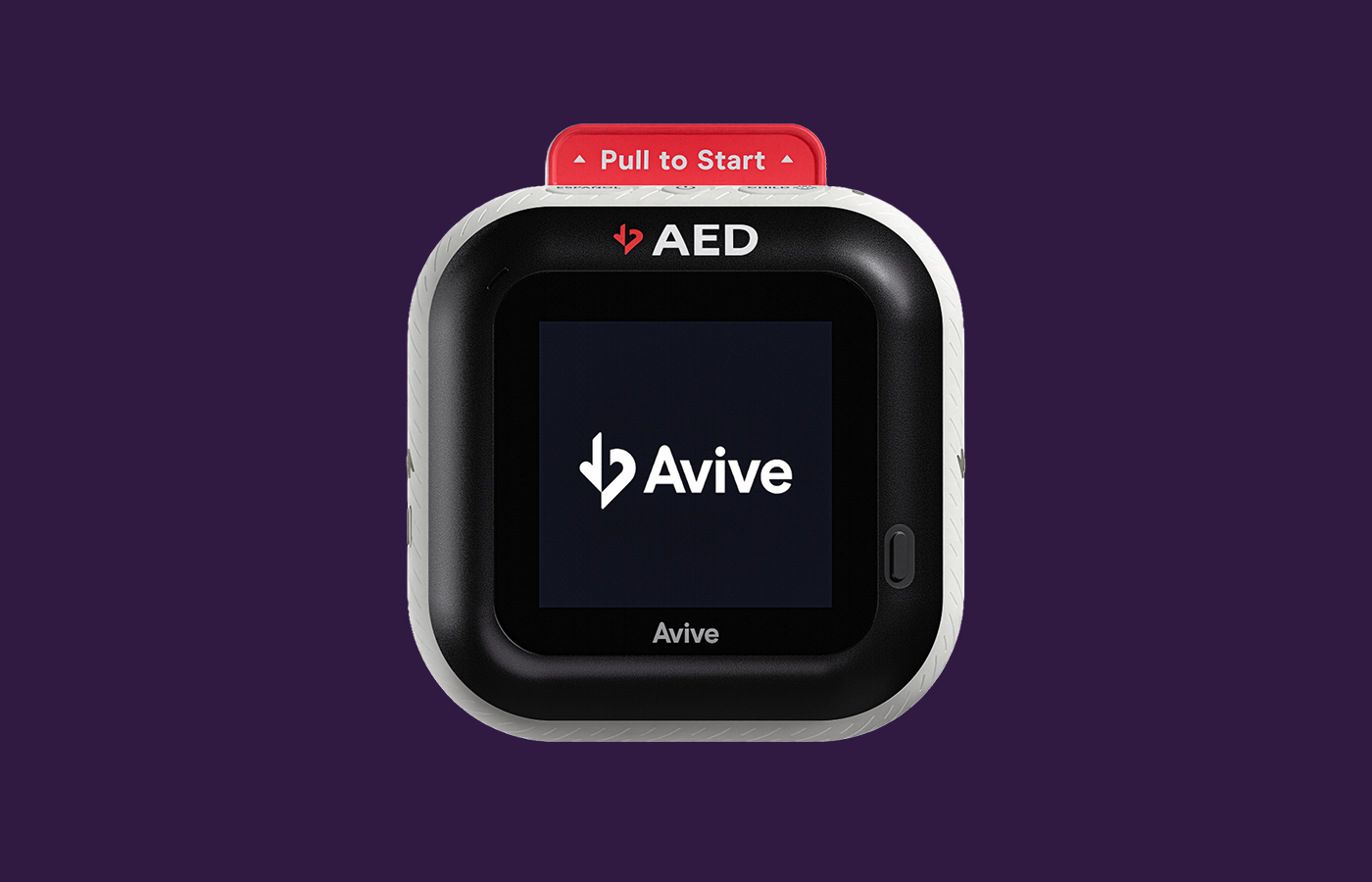
Save 5% on the purchase of an Avive DEFIB/AED with promo code: HeartHope5
Provide your email to receive communication about Heart of the Matter and saving lives.
Dedicated to saving lives, souls, and bringing hope to the human heart
Heart Hope operates under OLGA W GRIFFIN MINISTRY
Registered Nonprofit Entity ID: 2001279885
